

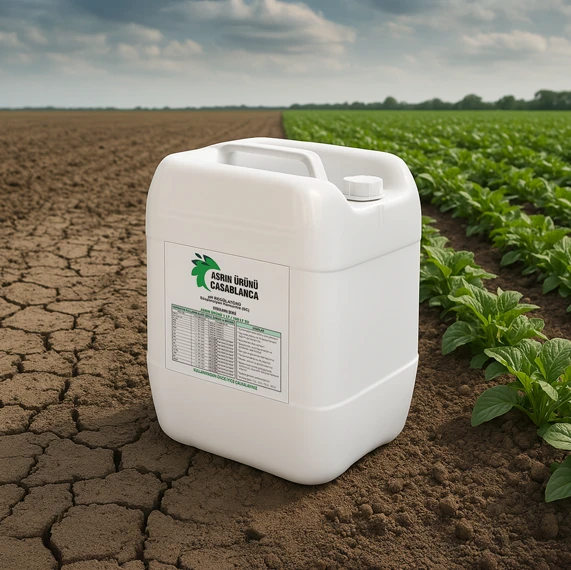
Calcium Foliar Fertiliser: Strengthen the Cell Wall, Protect Quality
Calcium: the plant's "cement"
Liquid calcium foliar fertiliser is one of the most valuable tools in modern agriculture. Calcium behaves like cement in the plant: it binds cell walls together, strengthens the connection between tissues and makes the plant resistant to mechanical stress, disease and oxidative stress. When calcium is lacking, that whole structure collapses · the breakdown starts from the inside out, and by the time you can see it, it is usually too late.
Problems caused by calcium deficiency
Blossom end rot
This common problem in tomato, pepper and aubergine shows itself as black, sunken patches at the bottom end of the fruit. Contrary to popular belief it is not a disease but a direct symptom of calcium insufficiency. Even when calcium is present in the soil, the plant may not take up enough of it because of irregular irrigation or high salinity.
Tipburn
In leafy vegetables such as lettuce, spinach and cabbage, browning and death of the leaf margins is a sign of calcium insufficiency. It is seen particularly under greenhouse conditions.
Storage losses
In fruit such as apple, pear and peach, calcium deficiency emerges after harvest as internal browning and bitter pit. A significant share of losses in cold storage comes from insufficient calcium.
Why should calcium be applied foliarly?
Although calcium is taken up from the soil, its movement inside the plant is quite restricted. Calcium moves only through the xylem (the water-conducting channels) and cannot be transported through the phloem (the sugar channels). As a result:
- Young tissue, growing fruit and shoot tips cannot draw calcium to themselves
- Under high humidity and low transpiration (greenhouse, cool weather) the amount of calcium reaching the fruit falls
- Foliar application delivers calcium directly to the target tissue, independent of these obstacles
When to apply calcium foliar fertiliser
From flowering onwards
As fruit set begins, start calcium foliar applications every 10–14 days. The first applications made in this period prevent blossom end rot.
Rapid fruit growth
Demand is highest while the fruit is growing fastest. The application interval can be shortened to every 7–10 days.
Before harvest
The last calcium application is made 10–14 days before harvest; it improves shelf life and resistance in cold storage.
Application tips
- Apply calcium early in the morning or towards evening · there is a risk of leaf scorch in midday heat
- Do not apply at the same time as potassium and magnesium (antagonism)
- It can be combined with boron · boron eases the transport of calcium into the cell
- Without regular irrigation, a calcium application remains insufficient
Frequently asked questions
Which calcium form should be used: nitrate, chloride or sulphate?
Calcium nitrate is the most preferred form · it supplies both calcium and nitrogen (in nitrate form) and dissolves quickly. Calcium chloride can be used foliarly but may cause leaf scorch at high concentrations.
Does calcium application help once blossom end rot has started?
Affected fruit cannot be saved, but newly forming fruit is protected. Intervene without delay, and for better results prefer a preventive programme.
When should calcium be applied to apple and pear?
Every two weeks for 4–6 weeks after petal fall, then 2–3 applications before harvest.
Does excess calcium harm the plant?
Excess calcium is not directly toxic, but it can cause indirect damage by blocking potassium and magnesium uptake. A balanced application is always the right approach.
See the difference in your field this season
Contact us to trial Casablanca on your own crop, find your nearest dealer or receive an application programme.