

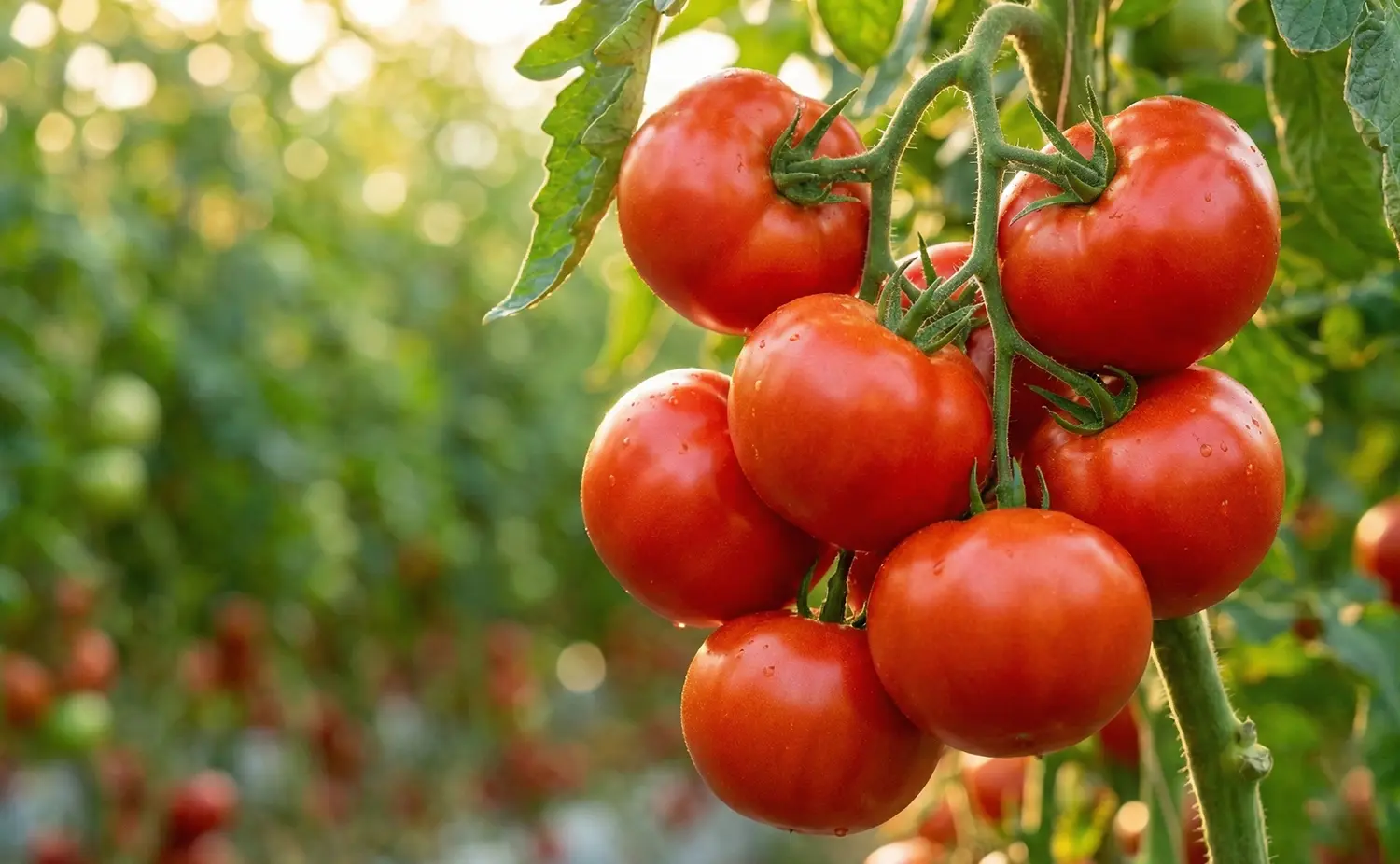
Preventing Fruit Splitting: The Critical Role of Calcium
Why does fruit split?
The choice of a fertiliser that prevents fruit splitting directly determines season quality, especially for growers of tomato, cherry, pomegranate and citrus. Splitting arises from an imbalance between the growth of the inner tissue and the development of the skin.
The main causes:
- Irregular irrigation: heavy watering after a dry spell swells the inside of the fruit quickly, and the skin cannot keep pace.
- Calcium deficiency: calcium maintains cell wall integrity. Without it the skin loses elasticity and splits.
- Boron deficiency: boron regulates calcium transport, so without it calcium does not accumulate in the fruit.
- Extreme temperature swings: a large day–night difference increases tension in the skin.
The role of calcium in fruit splitting
Calcium is the building block of the pectin bonds that form cell walls. When calcium is deficient:
- Cell walls weaken and cannot withstand turgor pressure
- The skin tissue of the fruit loses its elasticity
- As inner tissue growth begins, the skin splits
An important note: calcium being present in the soil is not enough. For calcium to accumulate in the fruit, active transpiration and a healthy conducting system are needed. When stomata close in extreme heat, transpiration stops and calcium transport to the fruit is blocked. This is why foliar calcium application is far more effective than a soil application.
A fertiliser programme against splitting
Calcium + boron foliar application
During the period when fruit growth accelerates (from pea size onwards), a calcium + boron foliar application should be made every 10–14 days. This application:
- Supports the pectin synthesis that keeps the skin elastic
- Eases the transfer of calcium into the fruit
- Prevents physiological disorders such as internal rot
The role of zinc in Casablanca
Zinc takes part in the synthesis of auxin, the hormone that regulates fruit development. A balanced auxin level allows the fruit to grow evenly and harmoniously. Casablanca can be used together with calcium applications to achieve this.
Irrigation management: technical measures
Irrigation discipline is as critical as calcium fertilisation:
- During ripening, increase irrigation frequency and reduce the volume per event
- Soil moisture sensors allow capacitive moisture monitoring
- In wet periods, soil management for drainage of excess water is important
- Mulching prevents sudden swings in soil moisture
Splitting risk by species
Tomato: the most affected species; both blossom end rot and concentric cracking occur.
Cherry: splitting from sudden water uptake after rain, concentrated at the end of the season.
Pomegranate: sudden irrigation or rainfall before the rind has completed lignification causes
splitting.
Citrus: rind splitting linked to calcium deficiency is common.
Frequently asked questions
Which fertiliser is used to prevent fruit splitting?
A foliar fertiliser combining calcium and boron is the most effective choice. Calcium strengthens the cell wall and boron enables calcium to be transported through the plant. The Casablanca formulation supplies both from natural sources.
What prevents tomato splitting?
Regular irrigation, a calcium + boron foliar application and avoiding excess nitrogen are the main measures. For protected growers, humidity control is also critical.
How is splitting prevented in citrus?
Apply a calcium foliar fertiliser every two weeks during fruit development (September–October). Maintain irrigation discipline and avoid excess nitrogen.
What can be done about cherry splitting?
Apply calcium + boron before rain. Cutting irrigation during harvest and using covering systems to keep rainwater off the crop also help.
See the difference in your field this season
Contact us to trial Casablanca on your own crop, find your nearest dealer or receive an application programme.